
You were told to be careful. The research says jump, and lift heavy.
The science-backed 12-week jumping and strength program that meets you where you are and progresses with you, so you can stay strong, capable, and independent into your 80s.
Founding price. Limited spots. Cart closes January 14.
- 12 weeks
- 20 to 30 min, a few times a week
- Home or gym
- Live Q&A with Chelsea
Created by a Doctor of Physical Therapy. Science-backed, no fear, no fluff.
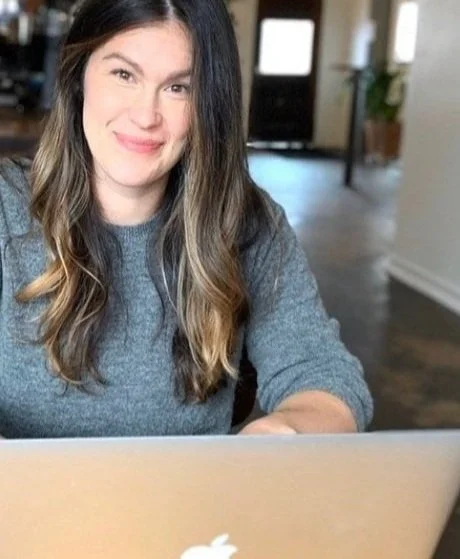
You want to be strong for decades. You were handed noise instead of a plan.
You want to hike the hills, carry your own groceries, get up off the floor without thinking about it, and live in your own home on your own terms for a very long time.
But when it comes to your bones, nobody has given you a plan. Just a lot of opinions.
Maybe this is you
You're doing everything "right." The walking, the Pilates, the light weights, faithfully. You've read the posts. You know the names of the studies. And there are a hundred "best exercises for bone" fighting for the same hour of your week.
You don't need more to do. You need to know what actually counts, so you can do that first and stop wasting time on the rest.
Or maybe this is you
Your DEXA scan just came back with osteopenia or osteoporosis. You were handed a pill and a pamphlet and told to "do some weight-bearing exercise." You asked for a PT referral and heard, "I can only refer you if you're in pain."
So you went online. Is walking enough? Is jumping safe for me? Do I need a weighted vest? How heavy? What will help, and what will hurt me?
It's not that you haven't tried. You've probably been working hard at the wrong things, because no one ever showed you the right ones.
The type of exercise matters more than how much. Jumping and heavy lifting top the list.
Bone is stubborn. It adapts to what's hard for it, not what's long.
Walking, swimming, Pilates, yoga, and light weights are wonderful for your heart, your mood, and your balance. Keep them. But on their own, they don't give bone a strong enough reason to get stronger.
The two things that build bone
Heavy, progressive strength
In the LIFTMOR trial, 101 postmenopausal women with low bone mass trained 30 minutes, twice a week, for 8 months.
Heavy lifting + impact
+2.9%spine bone densityGentle home exercise
−1.2%spine bone densitySame time commitment. Opposite direction.
Only one minor adverse event in the heavy group: a back muscle spasm. The study used advanced moves (like jumping chin-ups with drop landings) with supervision. In this program you build up gradually, starting where you are.
Watson et al., LIFTMOR, Journal of Bone and Mineral Research, 2018.
Jumping and impact
When you land from a jump, your bones take a quick, sharp load of several times your body weight. Bone responds to loads like that, the kind it isn't used to. It doesn't need many. A short set of jumps, done often, sends a strong signal. That's why jumping is a daily habit in this program, climbed one rung at a time.
In a hopping study, 35 postmenopausal women aged 55 to 70 hopped on one leg for 6 months, building up gradually to 50 hops a day, in under 15 minutes. The other leg didn't hop, so each woman was her own comparison.
Hopping leg
+0.81%hip (femoral neck) bone densityNon-hopping leg
−0.57%hip (femoral neck) bone densitySame woman. Same diet, hormones, and medications. Only the hops were different.
Imaging showed no signs that the hopping harmed the knees.
Hartley et al., Journal of Bone and Mineral Research, 2020.
Strength and impact, together. That's why this program does both.
Shared as educational information about what the research shows, not individual medical advice or a prediction of your results.
You're not frail. You're not 25. So who is this advice for?
When Joanne went looking for help after her DEXA scan, here's what she found:
"I really felt like I either had to listen to 20 year olds, or I had to listen to what the osteoporosis people were telling me about being safe. There was nothing sort of in between."
She called gyms and asked for someone who specialized in osteoporosis. The answer was always "of course." Then she'd ask a couple of questions and realize the trainers mostly had experience with people who wanted to look good.
Online, she saw women who were already lifting 50 pounds. "Well, I'm not going to do that. So like, get me there."
That "get me there" is exactly what's been missing. A clear, gradual path from where you are today to genuinely strong, without the bro energy and without the bubble wrap.
This is not physical therapy. It's not personal training. It's a research-based strength education program for bone, so you finally understand what to do, why it works, and how to progress it yourself.
A clear path from where you are to strong.
A 12-week progressive jumping and strength program that teaches you exactly what to do for your bones, why it works, and how to keep progressing it for the rest of your life.
The Jumping Ladder
Progressed impact, from your first gentle hops to landing from height. A few minutes most days. You move up only when your body is ready.
Heavy, progressive strength
The lifts the research points to most (squats, deadlifts, lunges, overhead pressing), built from wherever you are now. Bodyweight or barbell.
Start where you are. Climb at your pace. Keep climbing for life.
Jumping and strength progress together, one step at a time. You hold until a step feels easy, then move up, with a clear path through the moments where most women get stuck.
The 12-week program: one climb, entered at your step, at your pace.
From bodyweight squats at her kitchen counter to 8-pound dumbbells in one session, rated hard but doable.
"I'm already feeling so much more confident there's a path forward."
Joanne, 67Month 1: Find your starting point
Find your starting level and your first rung on the Jumping Ladder. A few minutes of jumping most days, your baseline weights, and the shift toward heavier sets with fewer reps.
Month 2: Build
Higher rungs on the Jumping Ladder, heavier loads, and longer rest. What to do when your dumbbells stop being enough.
Month 3: Own it
Progressing on your own, with the habits and know-how to keep going long after week 12.
What this means for you
- Starts where YOU are. The Find Your Starting Level guide puts you on the right rung and the right weight, whether that's heel drops and two-pound dumbbells or box jumps and a barbell.
- Essentials first. You'll know your must-do lifts and jumps, then add the extras you love if you have time.
- No more guessing if 5 pounds is "enough." You'll learn exactly how heavy, how many reps, and how long to rest.
- Built around your life. Keep the walking, Pilates, water aerobics, and pickleball you love. Add what counts.
- Efficient. About 20 to 30 minutes, a few times a week.
- The why, not just the what. The science made clear, so you understand what you're doing and can keep doing it for decades.
Because this was never really about bone density. It's about being the strong, capable, independent woman you want to be, for decades.
What women are saying
"I'm already feeling so much more confident there's a path forward."
Joanne, 67
Joanne had been doing bodyweight squats at her kitchen counter, unsure when (or if) she should add weight. In her first session she found her starting point and finished squatting with 8-pound dumbbells, rating it a 7 out of 10. Hard, doable, and right on target.
"Give me the bare minimum, and then I can throw on more."
Dawn, fitness instructor
"I like having a plan and accountability to prioritize my workouts, and I know I need to increase my weights safely and effectively."
[Founding member win #1: a specific result, in her words]
[First name, detail]
[Founding member win #2: a specific result, in her words]
[First name, detail]
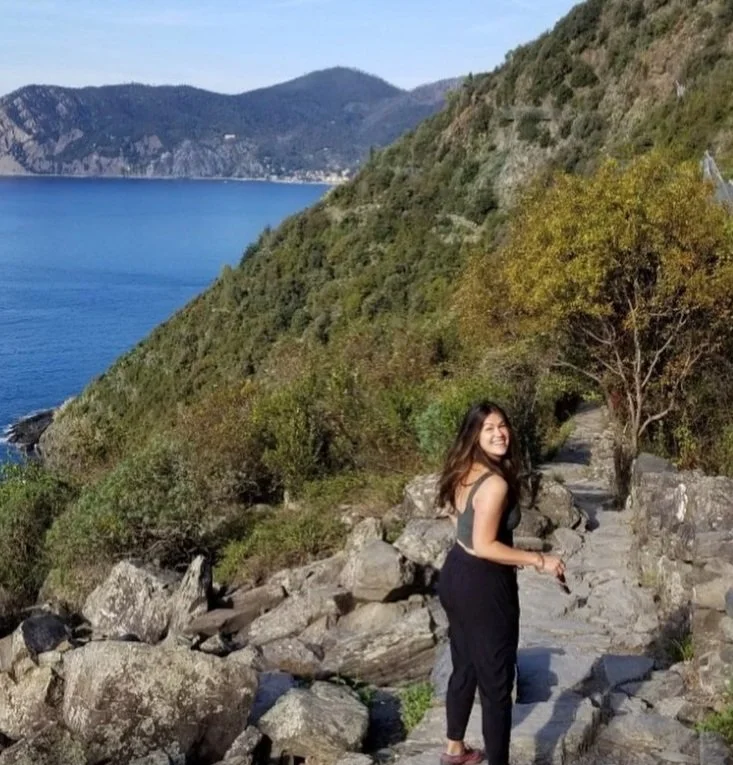
Hi, I'm Chelsea.
I'm a Doctor of Physical Therapy with more than 10 years of experience helping active women get and stay strong. I've worked with everyone from athletes to thru-hikers in their 70s to women running their first 5K in their 80s.
I'm also a competitive masters sprinter, and I train this way myself, for my own future. Because I want to be the woman hiking, lifting, and living on my own terms at 85.
I've watched too many women get handed a pamphlet when they needed a plan. I'm on a mission to change how women are told to age: not careful, not fragile, but strong.
Dr. Chelsea Matthews, PT, DPT, CMTPT, SFMA
Everything you get as a founding member
Before launch: connect the checkout link to every Join button.
That's about $58 a week for 12 weeks. Backed by the Show Up Guarantee.
This is the lowest price this program will ever be. It goes up for the next cohort.
Founding spots are limited to [number] women so I can give this first group my full attention. Cart closes January 14, or when spots fill. If it fills, you'll be able to join the waitlist for the next cohort at the higher price.
Limited spots · Cart closes January 14What happens after you join
- Check your inbox for your welcome email and login.
- Take the Find Your Starting Level self-check to find your first steps.
- Start week 1 on [start date], with your first live Q&A on [date].
Guarantee
The Show Up Guarantee
Do the work for the first [X] weeks: follow the sessions, log your reps and how each set felt, and bring a question to a group call. If you don't feel clearer about how to train for your bones and more confident under heavier weights, email me by [date] and I'll [refund you in full / make it right].
You deserve to say yes without worrying about it.
Built for a specific woman.
This is for you if…
- You want a clear plan, not more conflicting advice
- You're ready to lift heavier, safely and gradually
- You're done guessing whether what you're doing actually counts
- You want to stay strong, capable, and independent for the long haul
- You're brand new to lifting, or you've been at it for years and hit a ceiling
- You've been cleared by your doctor for resistance training
This is not for you if…
- You only want gentle, low-effort exercise
- You're looking for a quick fix. This is a real, progressive approach you'll keep for life.
- You want one-on-one programming or physical therapy for an injury
Frequently asked questions
Is this safe if my DEXA scan showed low bone density?
The research on heavy, progressive training includes women with low bone mass, and this program builds you up gradually from your own starting point. It's education, not medical treatment, so you'll need clearance from your doctor for resistance training before you start.
Is jumping safe for me? I haven't jumped in decades.
You'll start at the bottom of the ladder, with heel drops and tiny hops while holding a counter. You only move up once a rung feels easy for a couple of weeks, because bones and tendons need time to adapt. If your DEXA scan showed low bone density or you've ever had a fracture, ask your doctor specifically about impact exercise before you begin.
I've never lifted weights. Is this for me?
Yes. The Find Your Starting Level guide starts you exactly where you are, even if that's bodyweight squats at the kitchen counter.
I'm already strong and active. Will this be too basic?
No. The progression scales with you. If you've maxed out your dumbbells, you'll learn what comes next.
I've always done 3 sets of 10. Why would fewer reps work better?
Bone responds to heavy load more than to more repetitions. The research points to heavier sets of about five, built up gradually, with longer rest between sets. It can feel strange at first. Dawn, a longtime fitness instructor, called it "turning the ship." You'll make the shift step by step, not overnight.
Do I need a gym?
Not to start. Most women begin at home with dumbbells. As you get stronger, you'll learn when heavier weights or a gym make sense, and which machines to look for.
What equipment do I need?
[Placeholder: e.g., a few pairs of dumbbells, a sturdy surface to hold for jumps, optional adjustable weighted vest later]
How much time does it take?
About 20 to 30 minutes, a few times a week. Heavier sets mean longer rests, and that's built into the time.
Can I keep my walking, swimming, Pilates, or golf?
Yes, please. The program is built to fit around the activities you love.
How do I know if soreness is normal or a warning sign?
You'll learn the difference, and how to adjust using the progression markers for each rung and lift. If something doesn't feel right, bring it to a group call, and check with your doctor about anything that worries you.
Can I do this while on bone medication?
This is an exercise education program, designed to go alongside whatever plan you and your doctor have chosen. Never change a medication without talking to your doctor.
Will this change my DEXA results?
No program can honestly promise that for you. What it can do is teach you the type of training the research points to for bone, so you can train for stronger bones and a stronger body, and keep doing it for life.
Will I get personal programming from Chelsea?
No. This is a self-directed program. You'll learn to progress your own training, and you can submit questions ahead of every live group call.
How do the live calls work?
Submit your questions ahead of time, join live if you can, or watch the recording. You never have to attend live. Call times: [placeholder].
How is it delivered?
The program and video library are on Thinkific, with a private member community and live Q&A calls on Zoom.
When does it start?
[Start date placeholder]
Is this physical therapy?
No. It's a fitness and education program. It doesn't create a patient-provider relationship and isn't a substitute for medical care.
What if it's not right for me?
You're covered by the Show Up Guarantee. [Short summary of terms]
Your 80-year-old self is counting on what you do now.
She's the one carrying her own groceries, hiking the hill, getting up off the floor, and living in her own home on her own terms. She gets built one heavy set and one jump at a time, starting with where you are today.
[Program Name]: 12 weeks of jumping and heavy strength for stronger bones
- Founding price: $697 (regular $997), or 3 payments of [$239]
- Limited to [number] founding members
- Cart closes January 14
- Backed by the Show Up Guarantee
You deserve more than a pamphlet. You always have.
Let's build you a bigger life.